
Kachch Kachch.
Last Tuesday night, I took an an overnight bus to Bhuj, which is a city in the Kachchh desert of Gujarat. Bhuj was serverly affected by the Gujarati earthquakes in 2001. The government, through economic incentives, has done an excellent job of reviving and rebuilding the city. Kachchh is also known for having extremely talented rural artisans and many NGOs have formed to help monetize the artisan’s livelihoods. In Bhuj, I visited Shrujan (shrujan.org), an NGO that works with rural artisan women.
I will be working with Saath to help create a sustainable, profitable business model for rural artisans near Ahmedabad that employs best practices of other artisan NGOs. Over the next few months, I will spend time with various artisan NGOs in Kachchh.
Traditionally, rural artisans have superb embroidery and stitching talent, but do not have access to market intelligence or financial resources and thereby cannot profit from their livelihood. Shrujan, by procuring materials cheaply on a mass scale, conducting market surveys and marketing/selling product through their outlets, allows artisans to focus purely on their embroidery while maximizing profitability. This model ensures that artisans are paid immediately upon completion of the embroidery and prevents them from collecting excess inventory. In addition, the artisans no longer have to incur debt to procure materials and equipment, which is expensive when done on a one-off basis. I unfortunately did not get to visit with any of the rural artisans, but interacted with the Shrujan staff.
Shrujan is very well run and for 40+ years has assisting artisans with their crafts and in education of life services. The one lingering question I have is the sustainablity of this model; the artisans are dependent on Shrujan for 90% of the supply chain and thus without Shrujan would unable to monetize their trade.
My journey to/from Bhuj was also an experience. The bus seats are very adjustable and on the way there, the person in front of me took full advantage and spent the greater majority of the 9 hour trip sleeping in my lap. Trying to avoid this unwanted spoon on the way back, I upgraded to a “sleeper” compartment. The bus has two levels of sleeper compartments which are closed off by curtains. Measuring 5 1/2 feet long by 3 feet tall by 3 feet wide, the sleeper seat prevented me from lying down or sitting up. Also, at each stop, people routinely would poke their hands through the curtain to check if the seat was empty. Lucky for me, I enjoy the protective fetal position and slept the majority of the trip.


-
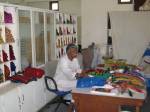
- Kits with materials for artisans to embroider.
-

- Final stitching done at Shrujan.
-

- Shipping to Shrujan’s outlets.
-
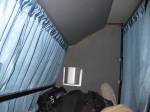
- Trying to sleep straight.
-

- Trying to sit up.


 finding rickshaw.