A Little Taste Of Home.

•March 21, 2009 • Leave a Comment

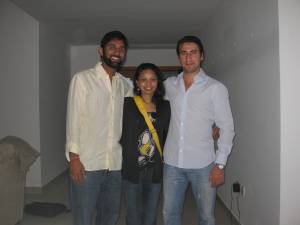
A few weeks back, I visited Felix in Abu Dhabi.   Mihira met us a few days later and we began to take in all things middle eastern.  And by that I mean it was America 3.0 but in the desert.

Pictures.

Top Five List.

5. Grocery Stores.  Frozen food sections, skim milk, cereal, drinks, meat.  It was unreal.  I spent an hour smiling at the selection.

4. The Establishments. Hotels and restaurants are all upscale and pristine as they tailor to ex-pats and tourists.

Beer Garden.

Beer Garden.

He works for his fun.

He works for his fun.

A Burger and Fries!

A Burger and Fries!

Saki.

Saki.

3. The scenery.  The views were gorgeous: pure blue water, manicured lawns, soft sandy beaches (all of which you could see from Felix’s balcony).  And the city’s people are extremely diverse; the majority of people are ex-pat workers from South Asia mixed with westerners and the native population of Persian Gulf Arabs.

Dubai.

Dubai.

View from Felix's.

View from Felix's.

Typical backdrop.

Typical backdrop.

Skyline.

Skyline.

Emirates Palace.

Emirates Palace.

2. The desert.  The city was literally created on a desert.  Sandstorms are frequent.  On Wednesday, Felix guided us into the desert. We spent the day ATVing, buiilding bonfires and playing judgement (Rick 2; Felix 1; Mihira 0).

Unreal.

Unreal.

1.

1.

M and Fifi.

M and Fifi.

Sunset.

Sunset.

Felix walks through fire.

Felix walks through fire.

1. Mihira and Felix.  No need for explanation…

Artistic.

Artistic.

AD Felix.

AD Felix.

img_5047

It looked like fun at the time.

M and Me.

M and Me.

Mihira, Felix and me.

Mihira, Felix and me.

NGO Rick.

NGO Rick.

Powdered Paint. Water Guns. Rain Dances.

•March 16, 2009 • Leave a Comment

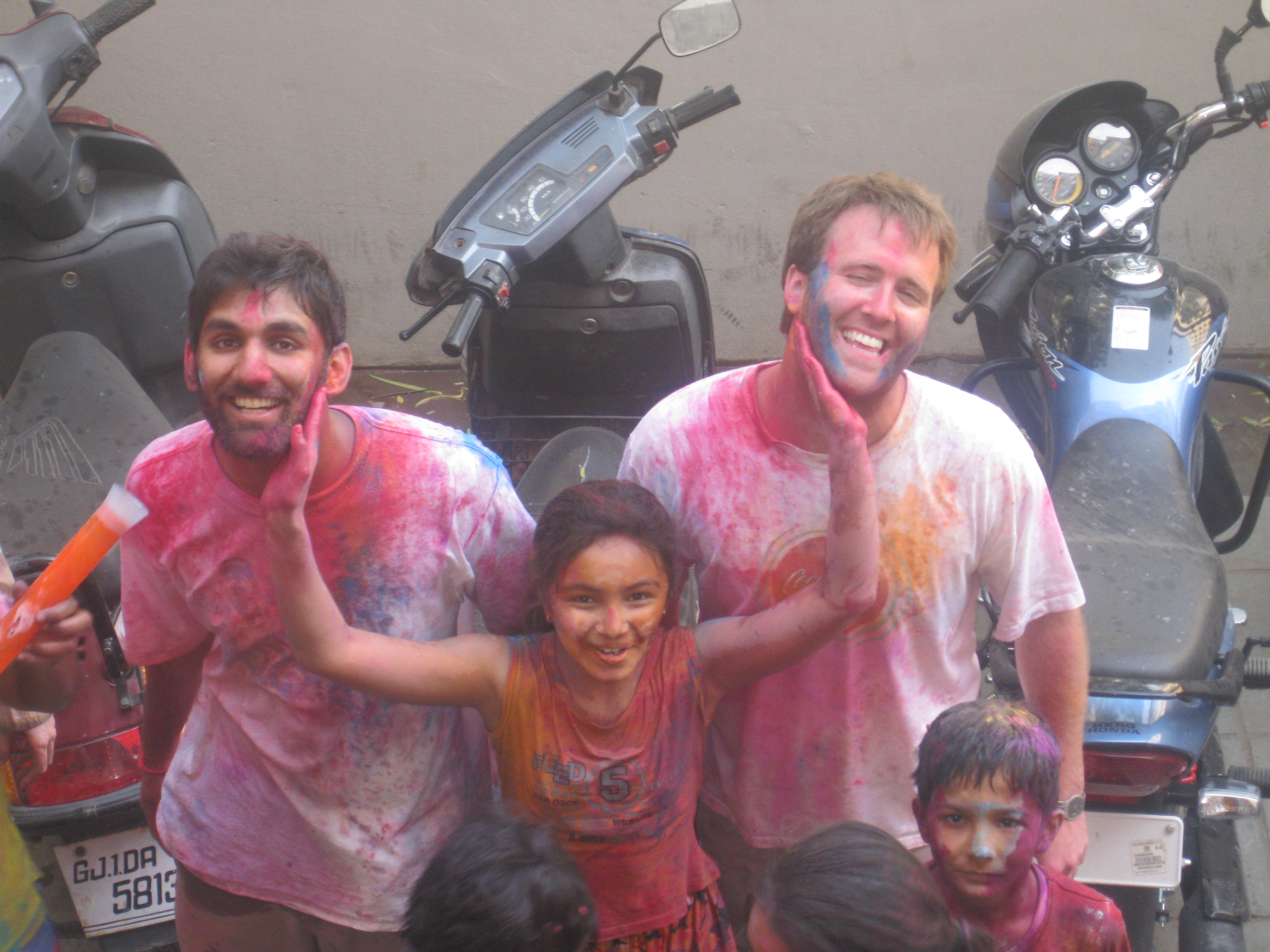
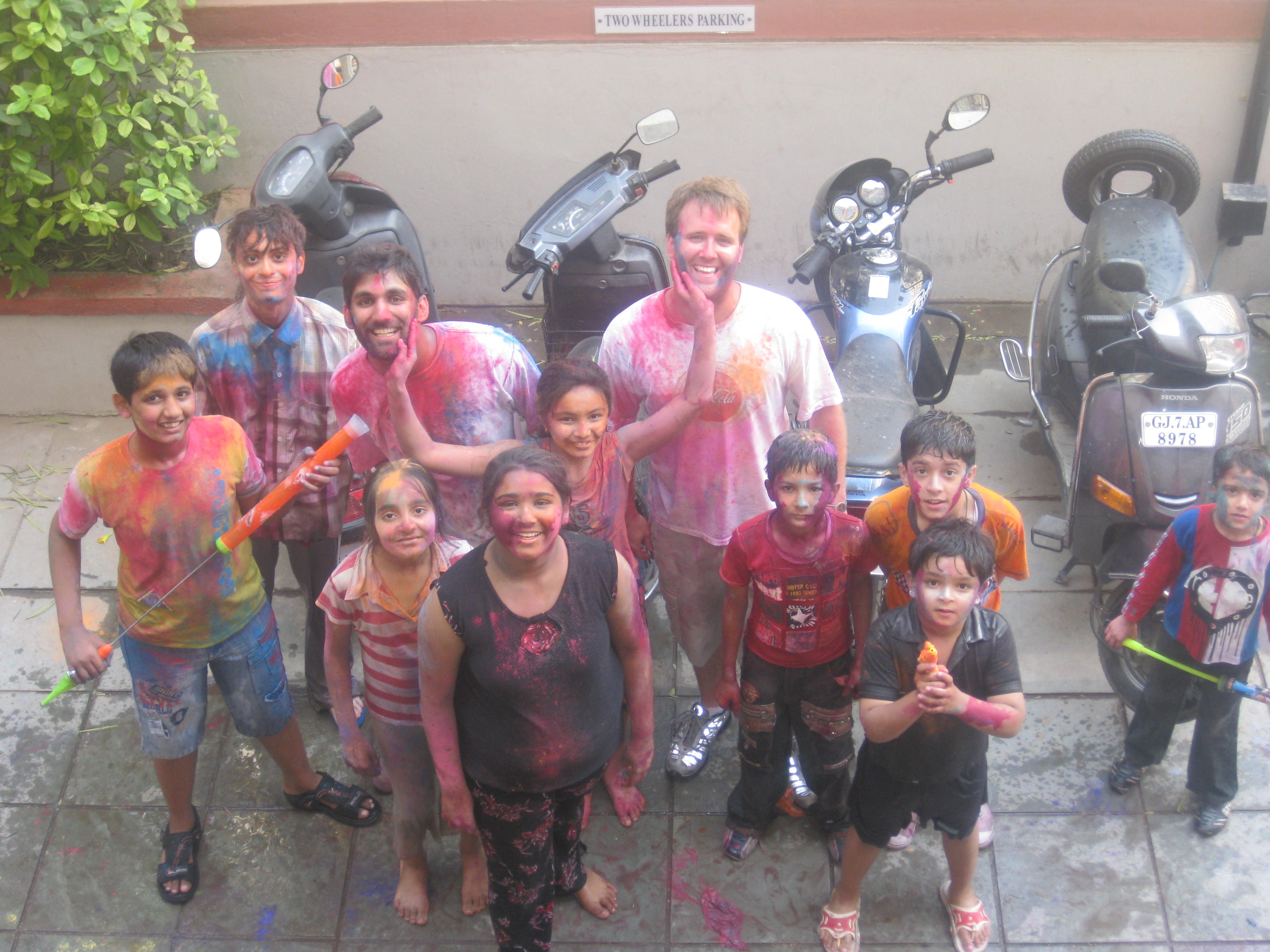
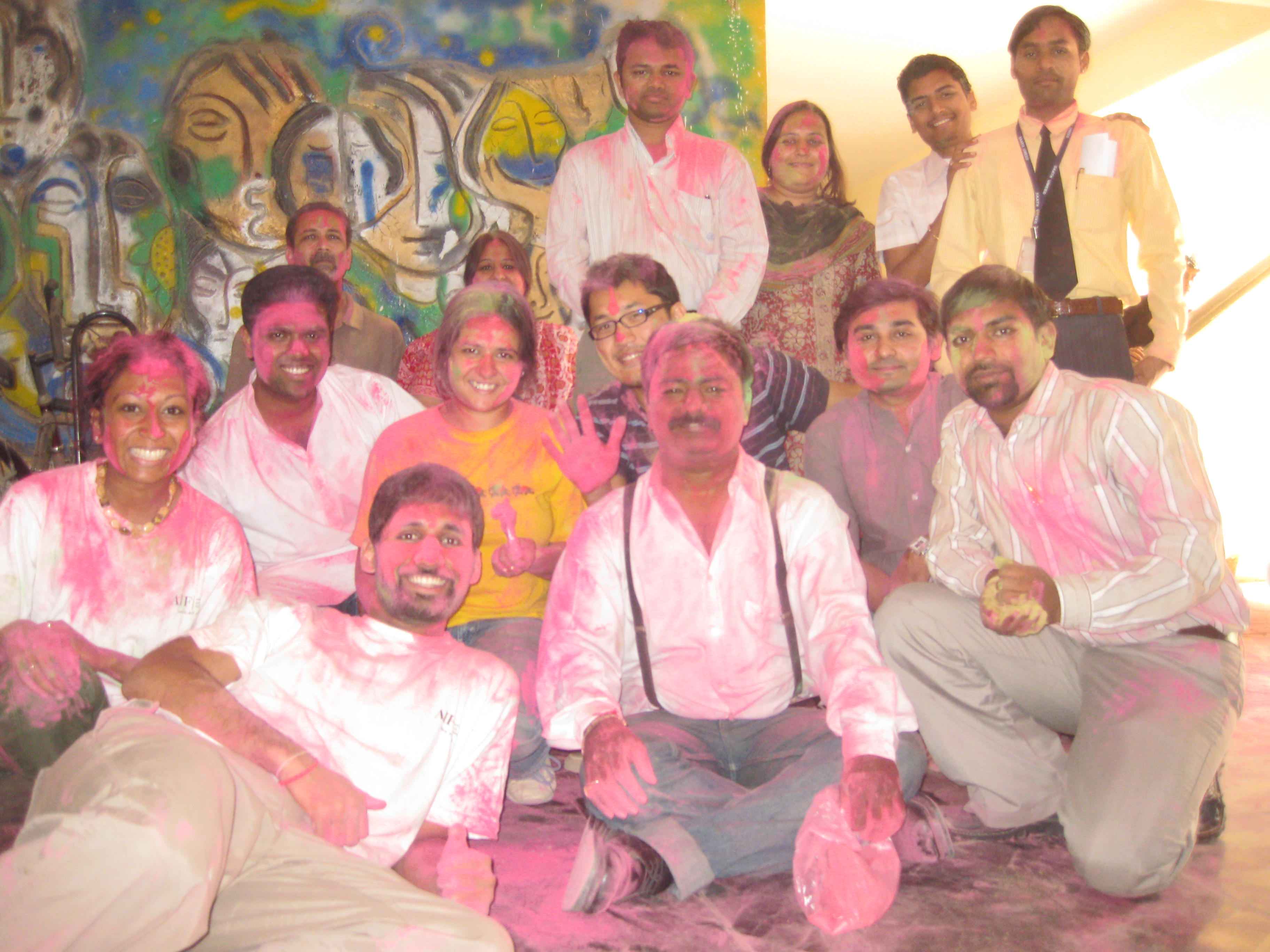
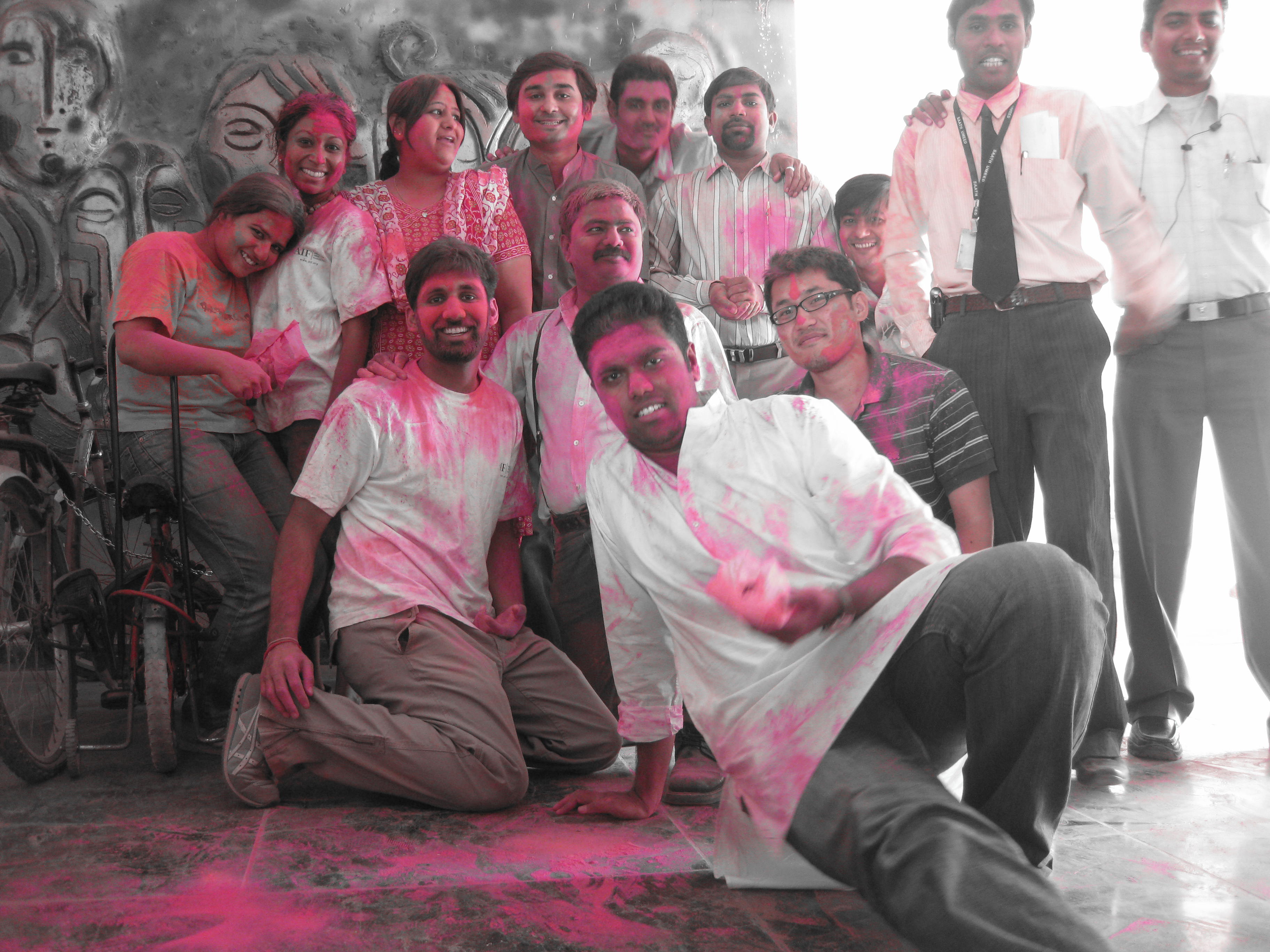
Last Tuesday & Wednesday, we celebrated “Holi”.  I’m not sure if this is how Holi was intended to be celebrated, but it was amazing nonetheless.  Link to Picasa Pictures.

ReFined Vocabulary & Just Rick.

•February 26, 2009 • 1 Comment

Two work stories:

The LRC is located within an UMEED training facility, so everyday I get to interrupt classes and guest lecture.  Interacting with the kids has been my favorite part of being in India.  I’ve instituted an English only rule in the LRC and during class.  So, the students enforced a Gujarati only rule for me.  It is educational for both of us  (My Gujarati is improving, I promise).  I’ve also convinced them to drop the “Sir” from “Rick Sir”.  I’m finally Just Rick again.

Recently, I noticed that when I asked the students how they were doing, they all responded with the same one-word answer: FINE.  To expand their English vocabulary, we’ve implemented the Rozario rule.  When Natassia (Rozario) was growing up, her parents forbade her to use one four-letter word NICE.  She was forced to substitute NICE with more meaningful words leaving her with a robust vocabulary (ask any of the fellows).  So with the Rozario rule in place at UMEED, students are no longer allowed to say FINE.  Now, I know that the students are cool, happy, tired, bored, very cool, handsome, trying to get to America, sleepy, and even refined.

Mavis Beacon Teaches Typing.

Mavis Beacon Teaches Typing.

Pooja Visits Umeed (BPO Class)

Pooja Visits Umeed (BPO Class)

Pooja w/ the CRS Class.

Pooja w/ the CRS Class.

And We Are Off.

•February 25, 2009 • Leave a Comment

Work Update Part 2.

This is week four of the LRC.  Things have picked up recently.  To date, we’ve enrolled 30 students and signed up 3 employers who will pay us for each mid-level placement.  We are preparing for the graduation of the next Behrampura batch (Behrampura is a slum area where SAATH has an UMEED center and our LRC is located).  We are hoping to get 50% of these current students to enroll.  I thought I’d include some pictures and details of the LRC below.

img_4469

Monil.

LRC Staff. Monil is a former UMEED student who was looking for a job with higher pay and more responsibility.  He is officially our data manager which unofficially means he does just about everything and is a one person marketing machine.  Chaitali: Our counselor.  She is patient, smart and very hardworking. She wants to come work in America.  James currently oversees UMEED’s placement program. He and I are working to secure employer partnerships.  Nitesh: SAATH’s Systems Manager (systems = everything that make SAATH operational). The idea is to expand the LRC to all existing UMEED centers and Nitesh is to oversee the growth. Like me, Nitesh is anxiety prone but he is also hilarious, hard working and passionate.

Nitesh Oza!

Nitesh Oza!

Marketing / Enrollment. We first targeted former students from previous batches.  Chaitali and Monil literally made over over 1,000 phone calls.  We then brainstormed for new ideas and came up with mass texting (see: Cameron).  This proved much more effective and walk-ins are regular now.   And now, we are preparing for the existing Behrampura batch to graduate.  If we can get 50% of each batch (batches graduate every 3 months) to enroll, we will have a membership of 400+ students by the end of the year – allowing us to help that many more students negotiate the professional world, track their progress and finally, providing us the supply to be a legitimate staffing agency.

My Role. Given that we sort of a start-up, each day is very different.  We are constantly thinking of new ways to increase enrollment and effectiveness.  Last week we had a call center come in and conduct interviews.  We noticed that some of our candidates weren’t adequately prepared, so we have added “mock interviews” to our services. We are creating templates to make resume building easier and are making industry specific interview cheat sheets.

Chaitali and James prepping a student for an interview.

Chaitali and James prepping a student for an interview.

In addition to managing the LRC, I’ve been moving around Ahmedabad on motorcycles (unfortunately, not on my own.  I’m all talk and I’m riding on the back of James’ bike) meeting with employers.  I drafted a contract that stipulates our services, our guarantees and our fees.  At each meeting, I introduce SAATH, UMEED and the potential LRC relationship.  In return, I get two cups of tea, thereby doubling my regular intake.  It is impolite to say no and everyone working in India needs their own Chai story. Plus, I get to speak directly to HR heads of prominent retailers and call centers and learn about new business models.

Employers. Late last week, we signed up a new call center that needs 100 people immediately, supporting the demand dynamics that the LRC is modeled on.  Their immediate interest in us was surprising, though.  Usually, there is a hesitation to employ slum labor, but this company is a proponent of “developing India’s youth”.  It was refreshing.

Ribbon Cutting.

Ribbon Cutting.

Opening Ceremony. The UMEED faculty, who were vital in setting up the LRC, asked Nitesh and I if they could plan a “ribbon cutting & coconut smashing (Indian / Hindu blessing tradition) ceremony for the LRC.  We hesitated given that this is just a pilot and didn’t want unnecessary attention, but they insisted and promised it would be  small. I guess what I’ve come to learn that nothing is as expected in India.  The coconut smashing and ribbon cutting turned into an hour long ceremony in which senior SAATH employees were invited, students dressed up and danced, and speeches were given.  Nitesh so appropriately asked, “If this was small, I can’t even imagine what they would have done for a  big ceremony?”

Monil: Former Student Turned LRC Employee. Monil and Me.

The ceremony was similar to that of a new UMEED center – a center which is ready to teach and place 250 students.  So, we felt that was unwarranted as we hadn’t (at the time) even enrolled one student.  And moreover, we thought we were patting ourselves on the back before we accomplished anything, with veteran SAATH employees present.  It was overwhelming and made Nitesh and I worrisome.

Looking back on it, I realize that the ceremony highlighted the enthusiasm and support of the faculty and students.  The faculty are the backbone of SAATH and they wanted to stress the imporatnce of our services to their students.  They spent an entire Saturday preparing and feel (rightfully so) that the LRC is very much theirs.  Since the first day, many of the students have asked to join before they even finish their training.  The love the idea of new computers and constant support.  The ceremony built much needed awareness for our center, proving that sometimes you just have to let things work itself out.  Worry is a wasted emotion anyway…

UMEED students preparing for their dance.

UMEED students.

Welcome To The LRC.

•February 23, 2009 • Leave a Comment

LRC Part 1.

After the customary ribbon cutting and coconut smashing (…and a few other traditions), our Livelihood Resource Center (LRC) has opened!  Replete with a full time staff, paying members, operational computers – the LRC is serving as a “career center” to youth living in slum areas.
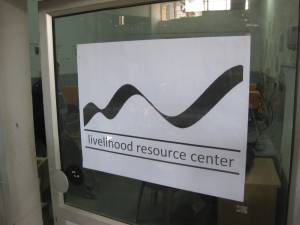
Welcome to the LRC!

Welcome to the LRC!

The LRC is primarily targeting graduates of UMEED, SAATH’s youth employability training program. UMEED trains slum youth with basic skills in computers, customer sales, hospitality management, etc. and then places them with jobs in the organized and formal sector (surprisingly, there is a demand for labor in India). Call-centers, shopping malls, hotels and nursing care – all part of India’s growing service industry – are in need of entry level labor.

After spending 3 months meeting with faculty, employers, and most enjoyably students and alums, we decided that we were missing a critical piece of youth employability.   Most students that I spoke to indicated that they came to UMEED for for computers and jobs, but upon graduation, valued their faculty relationships most.  The training we knew was complete – the methodology was proven, funding was in place and the demand for labor was constant – but the support for a graduated students was not there. The mentoring faculty had 150 new students to train and did not have the capacity to counsel alums.

BPO students.

BPO students.

Now, for me, entering the real world after college was extremely daunting even after 4 years of preparation (I may or may not have cried), so I can’t imagine how a youth with limited education and no professional experience could handle a job receiving inbound phone calls from demanding  and pushy customers after just 3 months of training. But the youth are succeeding.  They have always been capable, they just needed the opportunity.

However, there are those that are unable to negotiate 50 hour work weeks or working on Holidays such as Diwali or Eid.  Without a formal support network, they quit and end up with the same informal, unsecure jobs or even unemployed.  At the same time, the students who have prospered are  often trapped in their entry level positions, unaware of their upward mobility. Finally, after UMEED, many students no longer have access to computers or e-mail.

That’s where the LRC comes in.   For us to responsibly help students navigate the fomral sector and to accurately judge the long-term impact of the program – both promotions and attrition –  we agreed that we would continue Umeed through a “career center”. In keeping with SAATH’s mission, we require each alum to pay Rs. 500 to promote responsibility and ownership; by paying, youth will be entitled to quality services.  To attract the students, we offer a “cyber cafe atmosphere” where youth can utilize e-mail and practice typing and English.  We then mentor and cousnel students, introduce them to aluni and prepare them for new jobs.
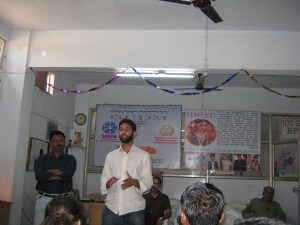
Speaking to students.

Speaking to students.

Unfortunately, the nominal Rs. 250 charge per student will not keep the center afloat.  But again adhereing to what SAATH has proven over the past 20 years, we plan connect the private sector to the untapped potential of our youth.  Employers are in need of not only entry-level labor, but also mid-level employees. The latter’s experience significantly lowers the cost of training and attrition for employers. Therefore, employers are willing to pay for mid-level labor, especially if we can respond to their staffing needs quickly and accurately. By enrolling and counseling UMEED graduates, we build a supply of experienced, capable labor and in return, the employers pay us  fees that cover our overhead.

The whole process – the idea, diligence, implementation and now execution – has taken longer than anticipated. You can’t put a price on having intimate knowledge of or grasping the lay of the land. Some of things that took me weeks to figure out would have been obvious for someone who speaks better than broken Gujarati or was familiar with Indian and NGO processes. And with the center open, we are facing new challenges (enrollment, expectations, quality of employment), leading me to question whether five months is enough to see the project through.

Installing New Computers.

Installing New Computers.

That said, our primary consitituents are the students and their response has been uplifting.  Our first employee, Monil, is a former UMEED student. In his interview, he said he wanted to work at the LRC so that he can give a bit of UMEED back to students.  As part of the “cyber cafe” program, he and I require all students to e-mail us weekly. It shouldn’t come as any surprise that our inboxes are already flooded.

Anyone interested in becoming an e-pen pal?

The End of Winter.

•February 22, 2009 • Leave a Comment

I have a backlog of posts I want to write about work.  We opened our Livelihood Resource Center two weeks ago and I’ll post the entries next week.  Meanwhile, it’s getting hot in Ahmedabad.  The weather from December through last Wednesday was perfect.  It warmed up to 80 degrees daily and the nights were perfect hoodie weather (50 degrees).  I’ve said in the past that I prefer intense heat over intense cold, but now, I’m not so sure.  Last September, the weather reached 105 degrees regularly and I’ve been warned that it reaches 115 daily between mid-March and May.  It’s uncomfortably hot.

weather

it's close to 100 degrees and it's only February.

Is This Not Also India?

•February 17, 2009 • 2 Comments

I could rant for hours on why I disagree with the criticism from India regarding Slum Dog Millionaire (just ask Natassia).  Decorated and well-received in the West, Slum Dog wasn’t appreciated by everyone here and even offended some. Amitabh Bachchan (the most famous man in Bollywood) said that there is poverty in every country, why highlight India’s? Slum residents in Mumbai protested the movie by raiding theaters, protesting that they were humans, not dogs.  And my closest family in India said that the movie was a) unbelievable; no slum kid could win the show and b) and it didn’t portray the real India.

My Thoughts. Have you seen a typical Bollywood movie? Unbelievable love stories mixed with over-the-top fight scenes (Ghajni!) and of course, rags-to-raja/riches stories. I respect Bollywood because it is a fantastic business.  It understands what viewers want to see (an escape), replicates that model and makes millions on each movie. And, yes, America has poverty.  And corruption, war, greed and racism, too. But I’d argue that there are plenty of western movies that highlight these social issues.  Slum Dog is just one movie that focuses on a significant part of Indian life: 15% of India’s population lives in slums and >40% live in poverty.  Hopefully, this movie opens the door for more directors / producers to make more movies like Slum Dog or Lagaan, A Wednesday, and Fashion; movies that highlight the good and the bad of India.

Ahmedabad Slum Residents Thoughts. After hearing about the protests of slum residents, a co-worker wondered out loud whether these people had actually seen the movie or if someone had told them that should be outraged.  I took the movie to the Vasna slum and shared it with members of the Community Video Unit, a group of slum residents (men, women, Hindus, Muslims) that makes short films on social issues.  “Masthe” (Gujarati for best), they said.  The imagery, music and Jamal’s survival spirit were inspirational to them – especially as they continue to make movies. They recognized that “dog” was what others (police, upper class) thought of them, and how the movie suggested the opposite.
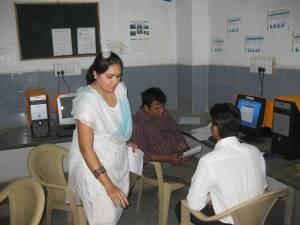
My 9 Year Old Cousin’s (Kanisha) Thoughts. I didn’t know how to respond to my family’s take on the movie. We have politely argued before on India’s poverty, communal relations, etc.  So when, my cousin and his son, Harsh (out of loyalty to his father, I think) didn’t like it, I wasn’t surprised. But I didn’t argue with them. They have lived in and experienced India far longer than I have and while I disagree with them, I respect their views.
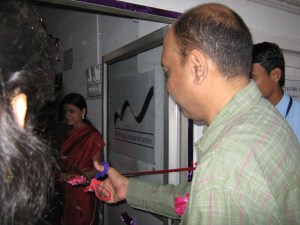
Yesterday, my cousin’s 9 year old daughter, Kanisha (the originator of “very bad, ricky bhai”) pulled me aside and told me the following story: “At school yesterday, our Mam [teacher] told us that she saw Slum Dog.  She didn’t like it.  She said it wasn’t a true image of India.”  I started to interrupt her, but she stopped me and continued, “So today on the bus, me Prutha and Janvi [her two best friends] called Mam to our seats.  We were passing the same kind of area where you work and we told Mam to look out the window.  We pointed to little kids sleeping on the street and said to her, ‘Mam, is this not also India?”

Vijendra.

•February 16, 2009 • 1 Comment

I went to the wedding ceremony of one of Ekta’s close family friends today.  It was another story book Indian wedding: decorations, food, gorgeous party plot, etc.  And like most posh events in India, there was an abundance of service workers (servers, bus boys, etc.).  As I was eating dinner, a server tapped me on the shoulder and in Gujarati asked me if I worked at UMEED (Saath’s vocational training program).  I said yes and he, Vijendra,  smiled big.  Living in a nearby slum, Vijendra joined UMEED and graduated in November. His class in Vasna was the first batch of students I worked with at SAATH.  The same batch that would fall over laughing when I tried to speak Gujarati and that wanted me to speak in English, not so they could learn the language but just so they could hear an American accent.  He didn’t recognize me at first because my beard, but said that when he heard me speak he knew it was me.  Vijendra has been working for the past 3 months (his first real job) and is loving it.  It was awesome.

Vijendra and me.

Vijendra and me.

Ektassia.

Ektassia.

India with Richard – Guest Blog.

•February 2, 2009 • Leave a Comment
A Kerala sunset.

A Kerala sunset.

While visiting Rick in Gujarat, I was exposed to what I can only describe as “social atrocity.”  The way that millions of people live was quite frankly shocking.  Now my family is from Kerala and that is where I spent the first 10 days of my trip to India.  I was naive in thinking that India cannot be as bad as what I have read in newspapers or seen on TV.  Kerala proved to be an anomaly with its blessed irrigation, tropical climate, and educational standards.  When I arrived in Gujarat, it was completely different.  I have never seen such a disparity between the middle-class (not upper-class) and the poverty-stricken.

Rick’s NGO, SAATH, is doing incredible things for the poor people in Gujarat.  I witnessed such things as vocational training programs, pre-school education, attempts at introducing healthcare, etc.

In Ahmedabad.

In Ahmedabad.

One of the major things I was surprised about was the segregation of slums among religions.  All Islamic slums lived together, Hindu lived together, etc.  Stop and think about that for a moment.  You live in a world that doesn’t care for you, controlled by a government who says one thing and does another, and throughout it all, these people have the audacity to keep religious biases.  Is there something wrong with that?  Perhaps.  But then the question becomes, why is this the case?  Well to me, the answer lies in generational hand downs.  Because this is a recurring life-cycle where no one is around the educate these children about the simple truths of right and wrong, religious warfare continues, even in the deepest slums of India.

I commend Rick for giving his time and efforts and taking what he has learned in a business environement and attempting to implement it in the harsh realities of the slums.  I caution everyone who goes to see these places that it is not a tourist attraction.  Yet it is a rude awakening that though “All men are created equally”, it is not the case that all men are treated equally.  For all those volunteers and not-for-profit workers looking to change the world with their work, it is impossible.  However, everyone should do their part.

SAATH's Microfinance Institute.

SAATH's Microfinance Institute.

Overall, my trip was amazing.  I saw things that I quite frankly may never see again (if I choose not to).  I have been humbled by this experience and will never forget it.  Rick’s hospitality was top-rated and I am lucky to have such a good friend.  My religion teaches me to pray for those who cannot help themselves.  I think after this trip, I will pray a bit harder.

-Shobin

Thumbprint Signatures – Guest Blog.

•January 30, 2009 • Leave a Comment

Legend has it that my grandfather’s thumbprint doubled as his signature. I’m not entirely sure how accurate that claim is, but it’s safe to say that he was functionally illiterate. Surprisingly, half of his children managed to go on to earn college degrees. What my dad calls the “selfless spirit” of the neighbors, extended family and community members who helped them get to that point is the stuff of Patel family legends.

Unfortunately, this selfless spirit was never apparent in my many trips to India. You see, in Indian cities, there are quite often no “bad” parts of town. It’s all intermixed—an upscale apartment complex and a slum area around the corner; a high-rise retail center there, and an open air e-waste recycler right next door. Inequity abounds and, from the looks of it, people just seem to accept it. The sun rises and sets, movies must be musicals, and poverty is what it is. This has always struck me as unsettling, but especially after accompanying Rick in the slums and spending time with those most impacted by the deep inequities in India. Systems may fail these people, but how can a country of so many people look on daily as bystanders as their neighbors suffer the harsh realities of poverty?

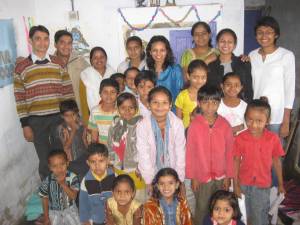
The class posing with their teachers and Pratham staff.   This is right after an impromptu talent show - no surprise, with names like Hrithik and Bipasha in the crowd!

The class posing with their teachers and Pratham staff. This is right after an impromptu talent show - no surprise, with names like Hrithik and Bipasha in the crowd!

Finally, on this visit, I had the privilege of actually seeing the “selfless spirit” in action.  My uncle set up a tour for us with Pratham (http://www.pratham.org/), an educational NGO spreading literacy across India, and we visited their Ahemdabad Bridge Program. As the name implies, the Bridge Program is meant to build children’s reading and performance levels up to par with those of their (relatively) affluent classmates. Classes meet in the morning, before government schools open for the day. Students of various ages and levels attend the same class, but work on basic literacy skills or subject-specific lessons appropriate for their skill levels. As they progress, they move up within the class.

The teachers are responsible not only for managing and teaching children of varying ages and levels, but also for executing door-to-door enrollment campaigns. Often, this involves daunting tasks such navigating the tradeoffs of spending precious labor hours at school. After hearing one teacher proudly share the story of how she convinced a set of parents that their daughter should go to school along with her brothers, I am convinced that her objection handling skills would rival those of most experienced professional salesperson.

The older children giving Rick a quick lesson in Gujarati grammar and pronunciation.

The older children giving Rick a quick lesson in Gujarati grammar and pronunciation.

One of the things that touched me the most is that Pratham’s model elevates the self-worth and social status of women in the community. Nearly all of its teachers and bal-sakhis (teaching assistants) are young women from the communities in which they work. Many have deeply troubling personal lives strewn with stories of people and systems that insist on failing them. The only thing they have in their favor is that they were able to attain a very basic level of education. Pratham helps them transform this asset into a powerful personal and community enabler. The students and staff Rick introduced me to at UMEED were testimony that other NGOs like SAATH have a similar effect.

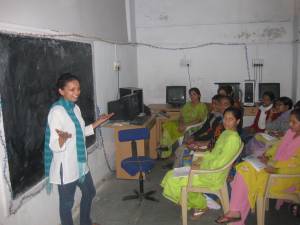
Speaking to Saath's Umeed BPO class.

Speaking to Saath's Umeed BPO class.

The reasons for India’s unique brand of inequity are countless and complex. That there is no visible sense of civic society pulling people to those that do not fit their very limited concept of their own kind is only one such reason, but certainly the one that explains why I had never before seen this “selfless spirit”.  Thanks to this trip to visit Rick in Ahmedabad, I am certain that it’s not all just the stuff of legends.

-Mihira