Little Broheim Doing Big Things – Guest Blog.

•January 28, 2009 • 5 Comments

My visit to Mexico at the impressionable age of nine left me scarred and saddened.  It was inconceivable to me how small children could be strewn on the streets like garbage, begging for food or money with imploring eyes and dirty hands. The destitution I saw tugged at my heart; I couldn’t bear even the thought of witnessing it again. But I couldn’t walk away either. I thus adopted a child through Children International to help from afar – and trained myself to emotionally remove myself from the situation if I were ever again to behold poverty in real life. So when I encountered the abject conditions in India, I resolved to keep walking ahead – to prevent myself from feeling too much for a discouraging and bleak cause – a cause I knew to truly be so much greater than the pain that felt so real to me.

The visit to the Taj Mahal changed that. A little boy, a child labourer named Raj, approached the group with the intent to sell key chains for ten rupees each. Now this was nothing new to us, and it seemed that everyone (the 60 Westerners attending Sonya’s wedding, that is) had become accustomed to ignoring soliciting kids. However, Raj was smart. And charming. And relentless. And impressed at least 100 rupees out of at least ten people in our group. I think he was actually only down three key chains at the end of the hour he spent with us, but up about 1,000 rupees. He effortlessly corrected my flawed Gujarati and proceeded to translate for me in Hindi.  And when Jesse asked him if he spoke other languages as well, he claimed to speak six more. And then he proved it. He rattled off full sentences with perfect accents. The kid was clearly brilliant. And that was the saddest part of all. Instead of applying his intellect, he spent his time selling key chains on the streets to tourists, depleting him of his potential. In the slums and in the unofficial child labourer industry, the nine-year-old was a success. He probably had a quota to meet and a family to supply for, so there was no way he would be able to go to school. And when we asked him about education, he essentially confirmed our assumptions.  The thought of Raj and his clever wit and impending dismal future stayed on my mind for days.

Child Labourers Class.

Child Labourers Class.

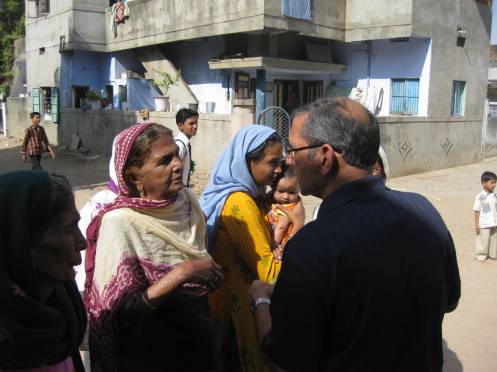
So the following week, when Broheim took us to the URC to visit the child labourer class, I was blown away. This was by far the most meaningful initiative to me, probably because it was so close to my heart and the recent experience in Agra. The class did not take the children off the streets, nor did it inhibit them from selling. Instead, it offered them the option to go to school on their own time. The kids were permitted to come and go as they could, for an hour here or an hour there – just enough to get some education – while continuing to earn the money they needed. And they seemed to cherish every minute of it. There was none of the customary grumbling and griping about having to go to school. They seemed fascinated and proud of everything they were learning. And were so excited to show off when the new “teachers” (i.e. broheim, the parents and I) entered the room. One kid told us that when he grew up, he was going to be a teacher too. It is no wonder that broheim speaks of the work he’s doing with such ardor and enthusiasm.  It is amazing. And fulfilling. And it makes me so proud that broheim is making an impact with a cause I had once rendered hopeless. I had been so wrong; I could actually see the hope that day – glistening right there in the kohl-lined eyes of the children of the slums.

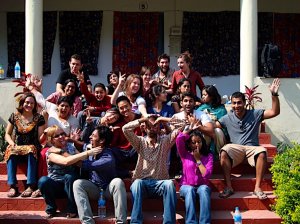
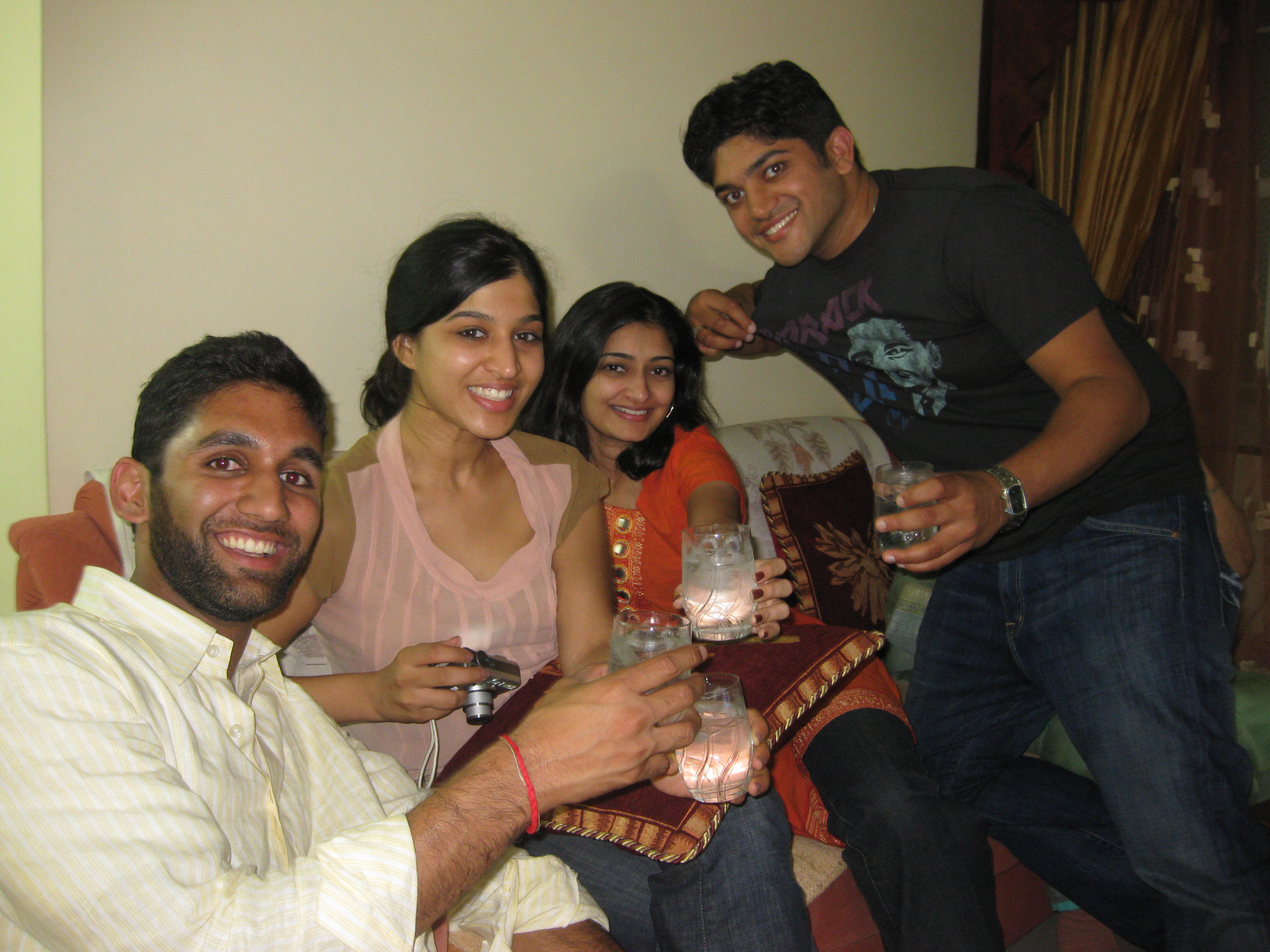
Broheim and me.

Broheim and me.

Love / miss you, broheim.

-sister

Smita & Piyush — Guest Blog.

•January 26, 2009 • 1 Comment

(Note: The next few entries are guest blogs from my family and friends who have visited Ahmedabad recently.  My parents, Smita and Piyush, entered their posts below.)

The Umeed* visit was an uplifting experience! Rick had planned a special meeting so Piyush and I could share our life experience with the kids – I was hesitant since I fear public speaking – but looking at the smiling faces of the students following Piyush’s talk, I stepped up and braved it out  and shared my dream – achieving a college education late in life (Rick and I graduated college the same year!).

Me with the Umeed students.

Me with the Umeed students.

We had a short Q/A session following the talk. The students did a great job of introducing themselves, indicating what program they were enrolled in and sharing what they hoped to achieve from their training – they all want to come to America!   Piyush began to explain that to come to America they first had to apply for an H1 visa!  Rick quickly reminded them that “India is the new America”.

I hope the Umeed vocational training gives these kids a leg up in life – I hope it lifts them to bigger and better places.

Rick’s in the right place – I believe this experience will leave a mark on him – a very good one!

*Just a side note: Umeed was a pilot vocational training program initiated by Saath – it was so successful that the Gujarat Government adopted and subsidized it in 38 locations.

-Smita Desai (Rick’s Mom)

——————————–

Smita and I have been visiting India almost every year. But this year, we made plan to visit India for special reason- to see Rick, who had gone to India for 10 months to work with Saath.org, NGO. We met his co AIF fellows Natassia, Ekta, co workers at Saath and Umeed. We were very much impressed with Saath and Umeed and work they do in slums of Ahmedabad. The teachers at Umeed were hardworking and nice. We had a great time interacting with young students of Umeed.

Marketing for Umeed.

I went on a marketing rally for Umeed.

Smita, Rick and I lectured about hardwork and dedication. It made me happy to share personal stories from when I was in Nadiad and how my family helped me. This lecture and going on the marketing rally were memorable experiences, which I will cherish for long time. Rick, we are proud of you.

-Piyush Desai  (Rick’s Dad)

Midpoint, Regards.

•January 25, 2009 • 2 Comments

And just like that, this trip is halfway done.  Fittingly, AIF hosted a midpoint conference for the fellows last week.  In between two 20 hour train rides, we found ourselves in rural Maharashtra at Baba Amte’s ashram, “Anandwan”.

Ananadwan's motto.

Anandwan's motto.

Baba, who passed away in early 2008, was a lawyer turned Gandhi disciple and social activist.  His life was dedicated to advancing the rights for those suffering from leprosy.  He created Anandwan to provide refuge to leprosy patients and those with physical handicaps.

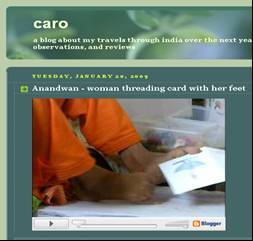
Video of woman threading with her feet.

Click.

Back then, leprosy patients were social outcasts as their affliction was regarded as a consequence of sins made in previous lives. We know now that leprosy is the result of an untreated infection, not karma.

Anandwan was remarkable, just as advertised. With exception to sugar, salt and kerosene, the community is self-sustainable.  They grow their own food and sew their own clothes.  They earn income by selling crops, gifts, artisan products and hosting retreats.

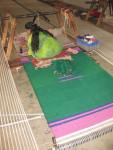
Artisans.

Artisans.

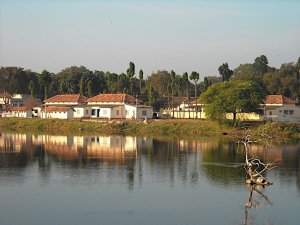
It was 90 acres of fields, trees, animals and vibrant people.  The latter of which was the most amazing.  No social stigmas or discrimination here; people lived in the serenity of their environment and in the humility of their upbringing.  Click the picture to the left to see Carolyn’s video of a woman who learned to sew with her feet.

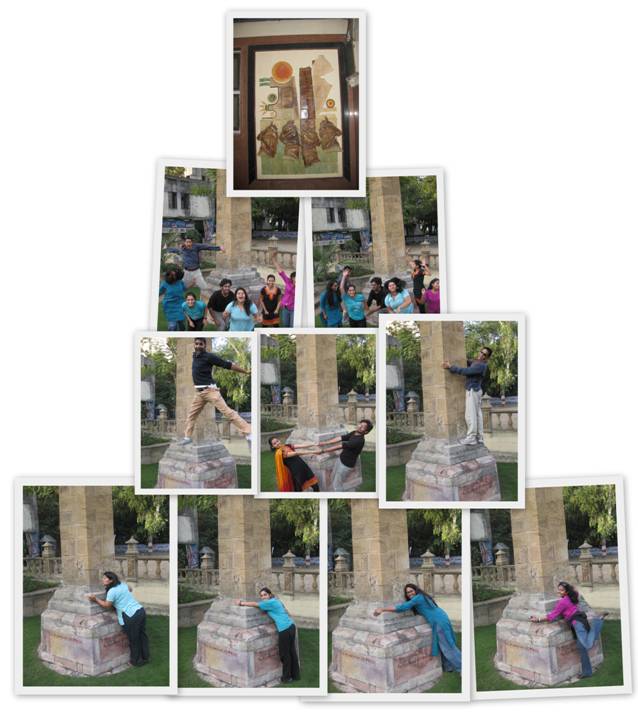
The highlights / takeaways from midpoint are below (thanks for the pics, Hamsa!):

10.  Bathrooms. The thing I dreaded most about India was the bathroom situation.  Holes instead of toilets.  Hand/water instead of tissues.  Buckets instead of showers.  Cold instead of warm.  Etc., etc.  Anandwan had all of the above (well, we did bring toilet paper) and it didn’t bother me.  I guess five months in India prepare you to go with the flow.  That said, even if it did trouble me, I wouldn’t have had the right to complain as some of the other fellows’ day-to-day bathroom accommodations are similar to Anandwan.

9. KeyNote and I-Video. I love powerpoint, so this is hard for me to say, but Apple’s KeyNote is 10 times better.  I’m contemplating abandoning PCs and becoming an I-user.

8. Middle of India. We took trains to Nagpur which is the geographic center of India.  We climbed the statue. People were staring.

Middle India.

Middle India.

India.

India's Scenery.

7. Trains. 40 hours of train rides proved long and exhausting, but manageable.   I had great company (4 other fellows were with me) and on the way home, it was cool to watch India.   And I traveled without Imodium.  I’ve changed.

6. Food. Without any additives (as opposed to overly sweet Gujarati food), the rotli, shak/sabji and dahl were delicious.  You could taste how fresh the home-grown food was in each bite.

5. Speakers. Ramki from SAATHI (HIV/AIDS NGO) and Rajubhai from SAATH lectured…rather conversed with the fellows.  Ramki somehow turned “Monitoring & Evaluation” into a compelling and interactive discussion that used case studies and our feedback.  Rajubhai discussed community building.  As I’m sure I mentioned before, he adheres to the “you can achieve anything as long as you don’t care about who gets the credit” philosophy.  He explained how the electricity in Ahmedabad’s slums were the product of Torent Power and how Umeed and its thousands of trained youth were a result of the Government of Gujarat.  In both cases, SAATH took a backseat in recognition and didn’t worry about the credit.  And in both cases, the community benefited.

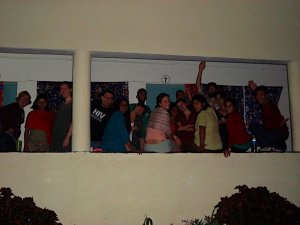
4. Anandwan. Again, it was beautiful, relaxing, tasty and accommodating.  22 loud Americans and our late night dancing and debauchery seemed to disrupt no one.

Anandwan.

Anandwan.

Fun.

Fun.

3. Fun. It was fun. Celebrity. Taboo (minus the slapping).  Dancing.  90s and Bollywood music.  Massages. And Old Monk.  It was “one of those nights” every night. Maybe this happens every year, but we like each other.

Disregard?

Hemant, disregard?

2. The Fellows. Hearing about each others work.  Sharing horror stories.  Complaining.  It was relieving, relaxing and fun.  Amidst all the presentations, three people really stood out to me.  1) Suzanne:  She is working in rural Maharashtra in microfinance, a field she has no background in, and is loving it.  She has embodied simple living, shrugs off any inconveniences (including rats, unless they have rabies) and has made a home here.  2) Matt & Sophie (they count as 1):  They live in the mountains.  Read this:  http://aifservicecorps.blogspot.com/2009/01/uttarakhand-by-matt-french.html.  And Matt has a man beard.  3)  Diane.  a) She speaks Hindi perfectly.  Which doesn’t bode well for American-Indians sitting next to her on train rides.  The train passengers were in awe of her.  I was jealous.  b) She is living in rural Kutch without many resources.  But rather than doing nothing, she hopped on the back of someones motorcycle, traversed 300 kms of coastline, slept in random people’s homes and temples so she could test attendance in Kutchi schools.  I’m not doing her work justice, but just know that she is making a difference. And she is measuring it.  A development dream.

1. The next five months. Before midpoint and after all my visitors left, I was a bit homesick.  The week was refreshing.  And motivating.   I’m happy that I am in India, but that’s not an achievement.  I can do more.  Hearing my peers’ stories was inspiring.  SAATH is an incredible NGO with resources.  I need to take more advantage of it:  Spend the majority of my time in the field/slums with Yaqoob bhai and Usha ben.  Get the LRC up and running.  Build a highly specialized training program instead of just talking about it.  Create an investment portal for SAATH.  Oh, and formally learn Gujarati.  And travel as much as I can.  And hang out with Harsh and Kanisha.  And have fun.

see you in ahmedabad.

aint nobody like my...

Ani, Ketu and Obama.

•January 25, 2009 • 1 Comment

Anishee, Ketu and their family came through Ahmedabad this week.  I spent time with their family (and ate great food).  Ani came to work with me.  And on on inauguration day, we stood up for our National Anthem and played the word drinking game for freedom, change and responsibility.

My favorite part of his speech was:

“To the people of poor nations, we pledge to work alongside you to make your farms flourish and let clean waters flow; to nourish starved bodies and feed hungry minds. And to those nations like ours that enjoy relative plenty, we say we can no longer afford indifference to the suffering outside our borders; nor can we consume the world’s resources without regard to effect. For the world has changed, and we must change with it.”

The White Tiger.

•January 23, 2009 • 2 Comments

Aravind Adiga in “The White Tiger” tells the story of Balram, a village boy turned “servant” driver turned entrepreneur.  In living the rags-to-riches, Indian dream, Balram first suffers from and then participates in India’s imbalance between rich and poor.   The book is very one-sided though, as it ignores all of India’s recent economic and social achievements.  However, it is as entertaining as it is brutally critical and is an awesome read.

My favorite part is below:

Addressed to the Premier of China:  “…despite your triumphs in sewage, drinking water, and Olympic gold medals, [you] still don’t have democracy. We Indians…may not have sewage, drinking water, and Olympic gold medals, but we do have democracy. If I were making a country, I’d get the sewage pipes first, then the democracy.”

white-tiger

Hello, 2009.

•January 11, 2009 • 4 Comments

Happy New Year. This year, I’ve resolved to stop using the elevator. I live on the seventh floor and figure going up and down the stairs a few times a day will suffice for my annual exercise resolution. I also made a year-in-review picture, which is below. And because I haven’t posted in awhile, I jammed everything from the past few weeks into this entry.

URC

URC

LRC. Launching the Livelihood Resource Center has encountered unanticipated though understandable delays. The computers that we received funding for in December still haven’t arrived. The only people interested in the counselor position are too qualified and are asking for much more salary than we can offer. This plus my not being a formal employee of SAATH and not fluent in Gujarati or Hindi or even NGO speak have slowed down the implementation. However, Monil, the Umeed student that we hired as our first LRC employee, has done an incredible job. In three weeks, he called over 500 former students and has many of them interested in enrolling in the LRC. Today, we finalized the registration website and on Monday, Monil will begin registering participants, collecting fees and surveying Umeed graduates on current occupations and desired advanced training. Slowly, slowly.

Work in general. I’m feeling more and more comfortable at work, especially in the field. I suppose it’s because over the past month I have been taking friends and family to see the slums and meet the community leaders and Umeed students. I get to speak Gujarati and more importantly, have become friends with many of the community residents.

Visitors. I will post soon all my visitors perspectives on what they saw here (Priti: I’m looking at you) in my next blog. Only half of them have read In Spite of The Gods, so maybe they will provide a view different than mine.

NYE

NYE

My sister pointed out that this was the first time I had ever been away from my family during Christmas. Thankfully, Mihira was here to celebrate the holidays. We spent Christmas visiting the slums, hanging out with family and EATING. It was comfortable, fun and relaxing. We then went to Aurangdabad to see the Ajanta (http://en.wikipedia.org/wiki/Ajanta_Caves) and Ellora Caves (http://en.wikipedia.org/wiki/Ellora_Caves). Both of them, especially Ajanta, were amazing.
Ajanta.

Ajanta.

Accidentally discovered during the British rule, these caves were carved and sculpted between 1,200 and 2,000 years ago. After the caves, we went to Mumbai and spent NYE with our friend Saurin. Out of respect for those lost in the terrorist attacks and due to security, Mumbai, as a city, was toned down. Link to Pictures from Mihira’s Visit.

dsc02428

Shobin.

Before I could get sad about my parents, sister and Mihira leaving India, Shobdogg Millionaire showed up in Ahmedabad. I liked him here. I gave him the Rick “tour” of the slums and we checked out the Stepwells, the Sarkhej Roza Mosque (http://www.sarkhejroza.org/) and Science City (a NASA space came wannabe that doesn’t even compare to Troy Daze). While at the beautiful

Sarkej Roza.

Sarkej Roza.

Sarkhej Roza Mosque, we stumbled through a slum during a Muslim holiday It was festive and intense at the same times. Vivid colors and organized drums were mixed with shattered glass and adrenaline-inspired dancing. We also spent 1 day and 13 hours downloading Slumdog Millionaire. I loved the movie. I thought it presented so many delicate and controversial issues (communal violence, organized crime, begging/prostitution, corruption, etc.) in a tactful, sometimes humorous yet powerful manner. Plus, so much of the slum backdrop was similar to the slums here in Ahmedabad. (I know I’m a year late with this song, but Paper Planes by M.I.A is awesome)

Making the kite strings.

Kite strings.

Kite Festival. Everyone in Ahmedabad is gearing up for Uttrayan – the Kite Festival — the kite flying tradition depicted in Kiterunner and that my dad called his favorite holiday as a kid. Unfortunately, I won’t be here for it. Our American India Foundation mid-point conference is this week (I take an 18 hour train ride to Nagpur in rural Maharastra tomorrow). To make up for it, Natassia, Ekta and I are going to take kites to celebrate Uttrand with our fellow fellows.

2008.

Pre-India 2008. (Courtesy of Facebook)

“Chrisimas” Pictures.

•December 25, 2008 • Leave a Comment
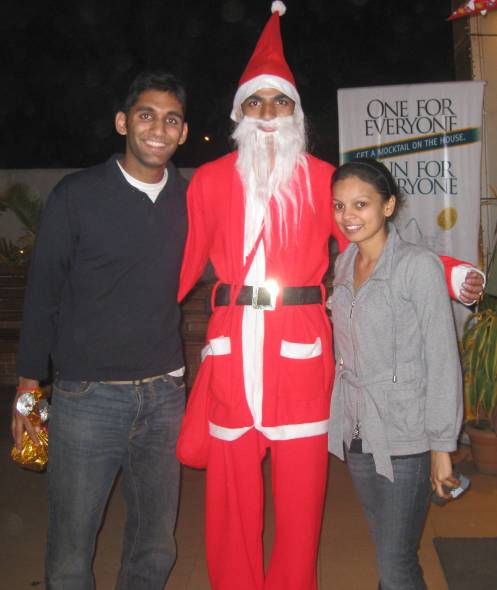
Skinny Santa.

Skinny Santa.

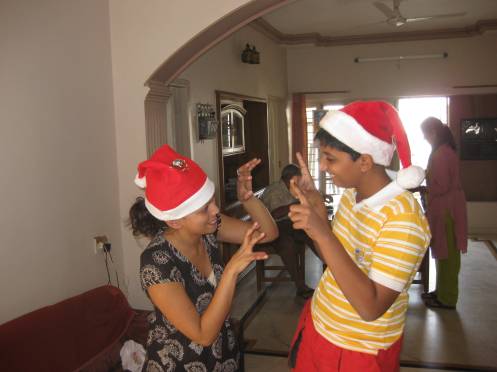
Monsters.

Monsters.

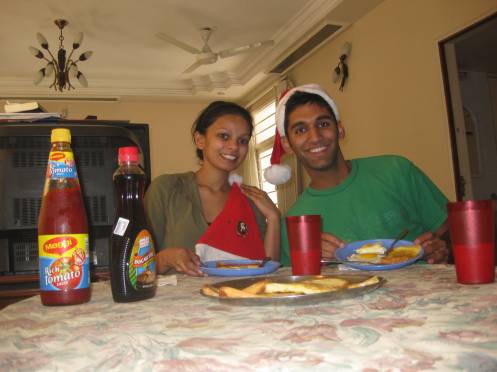
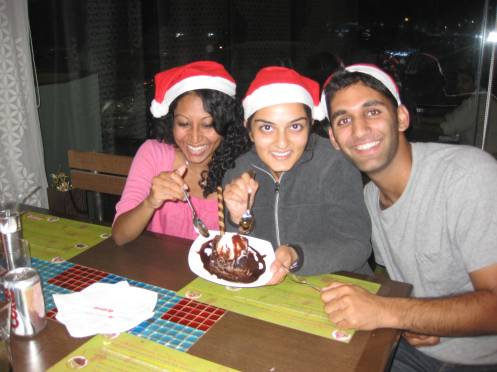
Christmas Brunch.

Christmas Brunch.

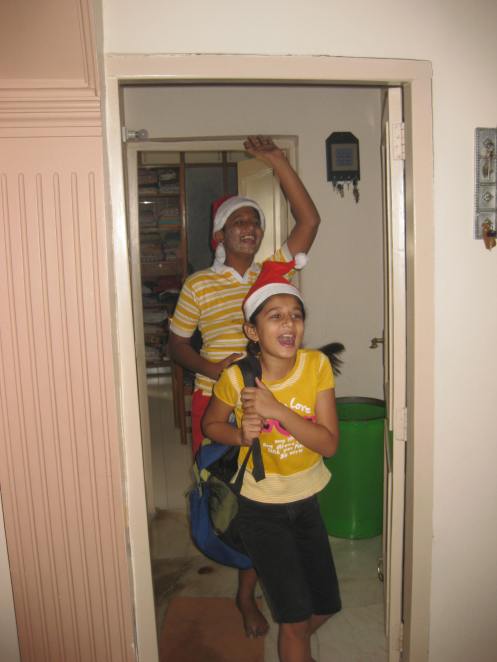
Shaving cream bearded Santa.

Shaving cream bearded Santa.

Rektassia Christmas.

Rektassia Christmas.

Marry Chrisimas.

•December 25, 2008 • Leave a Comment

Stencie, the Umeed coordinator in the Vasna area, organized a Christmas party / competition for her students. Decorations were hung from the ceilings and “Marry Chrisimas” was written on the walls and signs. Within each training batch, there are 3-5 classes (business process outsourcing, information technology, hospitality management, customer sales & relations and hardware). Each class decorated their respective rooms and then I was asked to pick a winner.

The students made Christmas trees on whiteboards, shook up shaving cream to create snow, put glitter and powder on fans to create snow, hung decorations throughout the school. The two best were the BPO (business process outsourcing) and CSR (customer relations & sales). We gave first place to CSR class because when I asked them who came up with the idea, they said it was a “team effort”. After, we ate cake and samosas and the students began to dance and tell jokes (I was asked to dance, but got nervous and declined).

Some of my friends at home often question (jokingly, I hope) why my family celebrates Christmas. I always say that we celebrate the North pole, the reindeer and the Hallmark “season of giving”, not Christmas in the Christian sense. I think my parents began celebrating Christmas because 1) it is an omnipresent cultural event that affects all Americans, 2) it was a great way to assimilate to American culture, and 3) a guaranteed way to spend time with family.

So it was great to see that in the predominantly Hindu Ahmedabad, a school composed of 70% Muslims and 30% Hindus and located at ground zero of the 2002 Gujarat riots, celebrated a Christian holiday. People often say that 20 years ago, Muslims and Hindus participated in each others traditions and customs here in Gujarat. Stencie and her students recreated that today.

“Marry” Christmas.

Lions, African Gujaratis and the Arabian Sea.

•December 24, 2008 • Leave a Comment

My family and 13 of our relatives rented a bus and drove 500 km to Sassan-Gir, a wildlife sanctuary in south Gujarat. We got lucky and saw one lioness which thrilled everyone (…well except for my mom and me; we are still spoiled from Africa)

We also saw the Siddi people, decedents of the East African Bantu tribes who are now living in Gir. I guess at different points over the last 1,000 years, enslaved Africans were brought to India. In Gir, Siddies live largely in their own communities and have not intermixed with Indians. As such, they retain their African appearances although they speak Gujarati and practice local religions (mainly Islam) and customs.

After Gir, we went to Diu, an Arabian sea beach city. The water was surprisingly inviting and we swam for a few hours. My mom and I tried to get everyone in the water, but the ocean incited massive fear in my family members. We also visited the Somnath temple and did Darshan.

The trip was awesome and relaxing. My extended family was incredibly appreciative of my parents for bringing them all together. I am too…although, I’m not happy that they are hosting a Christmas party at home this year without me.

Picassa Pictures: http://picasaweb.google.com/rick.desai/FamilyVacation?authkey=LnWaKmqTV7w&feat=directlink

I like Nala better.

Nala?

The Fam.

•December 22, 2008 • Leave a Comment

My parents and sister spent two weeks in Ahmedabad with me. I took them to work in the slums. They took me to a lion sanctuary and a beach resort. Fair trade. I had rambled on and on about Saath and Umeed to my parents for the past few months. So, I think that by seeing all the programs live and by interacting with the community, everything clicked for them. Priti and I resumed sister-brohiem interaction and proceeded to fight the entire time she was here, but I still had an awesome time with her (make March happen). We spent a lot of time with my dad’s family and went to Karamsad and Baroda to see some of my mom’s family.